How I Pick Trading Crypto Sites That Match Your Style
How I Look At Trading Crypto Sites
When I began evaluating trading crypto sites, I recognized that fees, security, and ease of use are the core things to look at. I decided to share how I view them so you can trade with confidence. The best platforms for crypto trading are not the same for everyone, because we all have different habits and risk levels.
I break down the key things I check when comparing these places, from transaction costs and wallet safety to user interface and customer support. My goal is to help you find a platform that fits your style and keeps your crypto secure. This post is just me sharing notes as a regular person, not a big brand or expert team. I read a bunch of technical write-ups and boiled them down to plain talk.
Fees And What They Cost You
First of all, I look at the cost of each trade. Some sites take a small cut on every buy or sell, and that adds up fast if you trade a lot. I always search for low fees crypto options because saving on fees means more coins stay with me at the end of the day.
Fee models vary a lot. Some use a spread, some charge a flat percent, and some have tier levels based on your monthly volume. You should read the fine print before you deposit any money. But don't skip this part, because a hidden fee can eat your profit without you noticing until it is too late.
A good site shows its fee table in plain sight. If you have to dig through ten pages to find the cost, that is a red flag. I also watch withdrawal fees because moving coins out can cost more than the trade itself on some venues.
Fee things I check
- Trading percent taken per buy or sell
- Withdrawal cost to move coins out
- Deposit cost if using a card or bank
- Hidden spread between buy and sell price
Keeping Your Coins Safe
Security is the next big piece. A good site should tell you how they store coins and whether they publish proof of reserves. Many centralized places list their wallet addresses and audit reports to show they are solvent. I like seeing that kind of open info because it means they have nothing to hide.
If a site never talks about custody or audits, I get nervous. The source I read says quoted exchanges like Coinbase file quarterly financial statements for shareholders. That is a good sign of transparency. Also, check if they use cold storage for most funds and only keep a small hot wallet for daily trades.
Customer support matters when something goes wrong. A site with slow or no reply is a risk. I look for clear help docs and a way to reach a human. This is part of ease of use too.
KYC requirements increase personal data exposure, but also reduce fraud and improve market integrity.
Speed And Why It Matters
Some trading crypto sites are built for speed. This matters a lot if you are a market maker or someone who trades in seconds. A market maker is a person or bot that continuously provides buy and sell quotes and profits from the small gap between prices, while managing inventory risk.
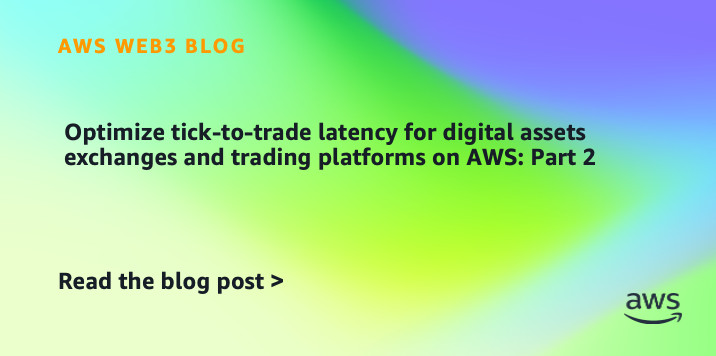
The time from when an exchange acknowledges a price update to when your software sends an order is called tick-to-trade latency. Every tiny fraction of a second can change whether your trade fills at the price you wanted. Under the hood, there is a hot path with five steps: data comes in, packets get parsed, signals get made, risk checks run, and the order goes out.
Most normal users won't build this stuff, but knowing a site cares about fast matching engines helps you pick a smooth experience. Bare-metal servers and close placement to the exchange reduce delays. The source notes metal instances cut tail latency by 15 to 29 percent compared to shared cloud slots.
They even have a benchmark tool that pairs simulated clients against a mock matching engine to measure speed. That kind of testing is how serious platforms prove their claims. I just want a site that does not freeze when price moves fast.
Where The Computers Sit
The biggest delay comes from geography. If your site runs its matching engine far from your computer or far from the market data source, you feel lag. The source shows a five-tier latency hierarchy: placement and region (up to 100 ms impact), network path (2 ms), instance type (200 microseconds), OS tuning (50 microseconds), and app tuning (5 microseconds).
That tells me optimizing the wrong thing is a waste. No amount of code tweaking fixes a bad region choice. So when I check trading crypto sites, I look for ones that use data centers near major exchanges or have low reported latency from independent tests.
Latency tiers in plain words
- Pick a region close to the exchange first
- Use direct network paths without extra hops
- Choose bare-metal or low-jitter machines
- Tune the operating system only after above
Networking tweaks like cluster placement groups and private links help inside a region. They say avoid load balancers and NAT routers on the fast path. For normal users, just know that a site bragging about kernel tweaks but hosted far away is missing the point.
Exchange Sites For Cryptocurrency Rules
Regulation shapes which exchange sites for cryptocurrency are safe to use. Most places require centralized exchanges to follow anti-money-laundering and know-your-customer rules. That means they ask for your ID and watch for bad activity.
Some regions are strict. New York has a BitLicense that many global sites avoid because it costs too much. Other states like Wyoming have friendlier laws allowing tax payments in crypto. I always verify licensing before I trust a site with my money, and I check if they publish independent audits from firms like CipherTrace.
To find a regulated site, I check for official registration, independent audits, and community reputation. Following news from bodies like FATF helps too. A site that talks clearly with regulators earns my trust.
Centralized And Decentralized Types
There are two main flavors: centralized (CEX) and decentralized (DEX). A CEX is a company that runs the order book and holds your coins in custody. A DEX runs on smart contracts and lets you trade wallet to wallet. To open coinbase is to use a popular CEX that files public reports.
DEXs are harder to regulate because the code is open and permissionless. The US sanctioned Tornado Cash in 2022, showing that privacy tools can get targeted. Still, many DEXs now blacklist bad wallets to work with regulators and protect users.
Why is regulation hard? Tech moves fast, assets are not issued by a state, servers sit in many countries, code can be cloned, and no universal rule exists. I keep this in mind when picking a site abroad.
CEX vs DEX simple points
- CEX asks for ID and holds your funds
- DEX needs no sign-up but you control keys
- CEX often has faster support and apps
- DEX can be more private but less hand-holding
Mobile Apps That Feel Easy
Crypto trading now happens mostly on phones. A good mobile experience means you can see prices and trade within two taps. The source compares E*TRADE app which needs many taps, and Robinhood which puts a buy button front and center. I like the Robinhood style for fast action.
Habit matters too. Apps that track your engagement and send personalized nudges keep you coming back. And almost every crypto app offers two-way referral bonuses, which helps them grow. That virality is a core engine in this space, and it can reward you for inviting friends.
Future mobile stacks may use AI to show market sentiment and cut onboarding to under two minutes. But the base test is simple: can you buy or sell in two taps without getting lost in menus?
Look for a UI that surfaces price information and core actions within two taps or fewer.
Best Crypto Exchange In Usa And Elsewhere
If you live in the states, you may search for the best crypto exchange in usa . Coinbase is a known name that follows US rules. But there are also fiat exchanges that let you deposit dollars or euros directly, which makes starting simple for new users.
Outside the US, many sites host in places like Seychelles or Bahamas to avoid heavy rules. That is not always bad, but you should know where your site operates. I check jurisdiction before I sign up, because a site with no clear home is hard to hold accountable.
For a best crypto buying platform , I want low fees, clear app, and fast ID check. The source says future onboarding may take under two minutes with integrated KYC and wallet connection. That would be a nice win for newcomers.
Hidden Ads And Referral Money
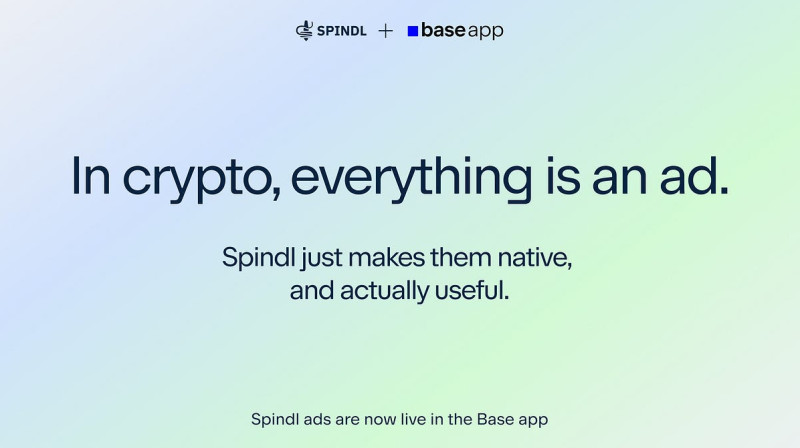
Here is something tricky. Any button or interface where the developer earns a fee for you doing something on-chain is basically an ad. That includes the "Swap" button in a wallet or a "Buy" button on a DeFi site. Builders embed codes that give them a cut of trading fees.
Phantom wallet earns over $200 million a year from referral fees without running banner ads. Spindl launched native ads inside the Base app that charge only when you do a real action like a swap. This matters when you evaluate the true cost of a site, because the "best" button may quietly cost you.
I now check if a site discloses its referral cuts. Transparent platforms that tell you about builder codes may earn more trust. It is your money, so know the route it takes.
Any piece of media, content, or user interface where the developer earns a fee for having you do something on-chain is an ad, full stop.

Developer Help And Apis
If you like to build your own tools, some trading crypto sites offer APIs. Alpaca Crypto API lets you trade crypto through the same REST or streaming interface as stocks. They partner with ErisX for execution and custody, which brings reliable infrastructure.
You can use one account for both stocks and crypto, and they have SDKs for Python, C#, Go, Node.js. A paper trading mode lets you test with real-time data without risking cash. That is great for strategy validation before going live.
Support around the clock helps when something breaks at odd hours. The source notes 24/7 global support for API issues. For a builder, that can be the difference between a missed trade and a fixed bug.
Alpaca API features I noted
- Unified account for stocks and crypto
- Direct API trading via REST or stream
- Multiple language SDKs for builders
- Paper trading to simulate without risk
Does E Trade Sell Crypto
You might ask does E*TRADE sell crypto ? The source mentions the E*TRADE mobile app as an example of a multi-tap trading UI, but it focuses on stocks and options. For crypto, you need a dedicated site or app. Robinhood is cited as a better mobile crypto flow with one-tap buy.
I would not assume a stock app handles crypto unless they say so. Always check the asset list. Some traditional brokers are adding crypto, but the fastest crypto UX comes from native platforms built for the job from day one.
This is why I separate my stock app from my coin app. It keeps things clear and helps me track fees per venue. You do you, but know what each app really offers.
Where To Buy Flare Crypto And Other Altcoins
When I wonder where to buy Flare crypto , I look at both CEX listings and DEX pairs. Smaller altcoins often live on decentralized exchanges first. You connect a wallet and swap from a major coin like ETH or USDC.
For unknown tokens, check liquidity and if the site blacklists scam contracts. A coingecko crypto exchange page can show which venues list a coin and their volume. I use that as a quick reference before signing up anywhere, because fake volume is a real problem.
If a coin is only on a weird site with no audit, I skip it. Safety beats hype. The same goes for any new token a friend sends me on social media.
Coingecko Crypto Exchange Listings
I mentioned coingecko crypto exchange as a info source. It aggregates data on many platforms so you can compare. In my blog I just share notes, not a company pitch, but I find these public tools handy when scanning the market.
When you evaluate a site, cross-check its claimed volume with an independent tracker. That helps you avoid fake liquidity. Also read the site's own "Learn" portal if they have one, as Coinbase Learn and Binance Academy do. Those portals gather regulatory updates and basic education.
Staying informed is a habit. I follow a few reputable news sites and the exchange's own blog. That way I hear about rule changes before they affect my trades.
Risk Tools For Big And Small
The line between retail and institutional trading is blurred. Big funds want the same speed as regular users but need strong risk controls. Platforms like Cloudwall's Serenity aim to give portfolio-level risk views across market, liquidity, and credit dimensions.
OTC trades can be opaque, creating hidden counterparty risk. Selective disclosure and soulbound tokens are emerging to balance privacy and proof. I think clear risk tools make any trading crypto site more trustworthy, even if I am just a small trader.
The source says infrastructure for institutional risk is still catching up. That means even big desks face gaps. For me, I just want a site that shows my position limits and alerts me on odd moves.
Convergence drivers from source
- Technology parity with low-latency access
- Standard products like futures and options
- Regulatory maturation reducing uncertainty
- Risk platforms unifying control for all sizes
My Simple Checklist
After reading all this, I made a short list of what I check before using a site. It is not exhaustive, but it keeps me safe. I look at fees, security, speed, regulation, mobile feel, and hidden ad models.
What I check on trading crypto sites
- Fee percent and withdrawal cost
- Published audits and wallet proof
- Server region and matching speed
- License in their operating jurisdiction
- App taps needed to place a trade
- Referral cuts baked into buttons
If a site fails two or more of these, I walk away. No perfect site exists, but the basics cover most troubles. I rather miss a quick gain than lose coins to a shady venue.
Keeping Watch Over Time
I'll keep watching how these platforms evolve. Mobile stacks will get smarter with AI personalization, and onboarding may shrink to two minutes. But the basics stay the same: know the cost, know the custody, know the rules.
If you find a site that fits your habit and shows clear info, stick with it but review yearly. I'm just one person sharing notes, and I hope this helps you trade with less stress. The world of trading crypto sites keeps changing, yet a calm check of facts goes a long way.
Comments on “How I Pick Trading Crypto Sites That Match Your Style”
No comments yet. Be the first to share your thoughts.