How I Pick the Best Safe Crypto Wallet for Your Needs
What A Crypto Wallet Is
When I first encountered crypto, I didn't understand what a wallet actually is. The short answer is that a cryptocurrency wallet is just a tool that holds your keys and lets you send or receive digital coins. It works like a browser does for the web, abstracting the underlying tech to make it usable. You can store, send, and receive things like Bitcoin or NFTs with it. The wallet itself is a piece of software that saves both public and private keys and communicates with blockchains on your behalf.
A wallet doesn't really hold coins like cash in your pocket. The coin lives on a blockchain, which is just a public ledger of who owns what. What the wallet keeps is your seed phrase and private keys - the stuff that proves the coins are yours. If you lose those keys, your money is still on the chain but you can't touch it. That's why I tell people to guard their keys like cash. A best safe crypto wallet is one that makes this guarding job simple for you.
How A Wallet Talks To The Chain
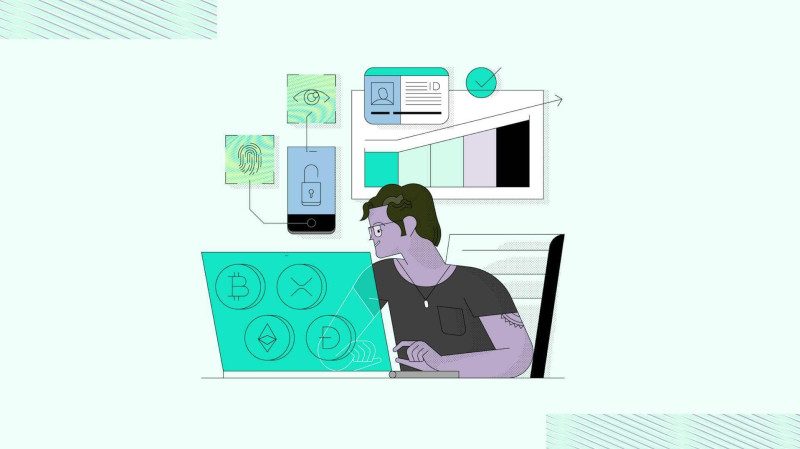
Let's look at how it works in plain terms. Someone sends you bitcoin by signing a transaction with their own keys. Your wallet shows the coin as yours once that signature validates. To receive funds, you give them your public key, which is like a bank account number. To spend, you use your private key to sign the send. This back and forth is how value moves without a bank in the middle.
Think of it like a bank account you control. The public key is the number friends use to pay you. The private key is your login, and if you share it, someone else can take the money. No two wallet addresses are the same, so your funds tie to you alone. When you create a new wallet, the app gives you an address made of letters and numbers, both upper and lower case. This is the base of every wallet I evaluate when helping a friend start out.
Hot Wallets And Why They Are Risky
A hot wallet is any wallet connected to the internet. That includes web wallets, mobile apps, and desktop apps. They are convenient for active trading. But because they stay online, attackers have a larger attack surface. Most major breaches I read about targeted hot wallets, and users lost significant sums.
I wouldn't keep a large pile of coins in a hot wallet. The code may have bugs or holes even with good encryption. You can cut the risk by using strong encryption or a device that keeps keys in a safe spot. Even then, only keep what you need for daily spend there. If your computer or phone is exposed to malware, a hot wallet is a bad idea for savings.
Kinds Of Hot Wallets
- Online wallets live in the cloud and are run by a third party, making them less safe.
- Smartphone wallets are apps on your phone, good for pay on the go.
- Desktop wallets live on one computer, safer from net attacks but lost if the PC dies.
- Any hot wallet can be reached from the net, which is the main weak point.
Hot wallets include the ones built into exchange accounts. Those are handy but the exchange holds the keys, which blends into custodial risk. I keep exchange wallets for small trade amounts only. The moment I accumulate, I move to my own device. That habit alone saves a lot of folks from loss.
Cold Wallets For Safe Keeping
A cold wallet has no internet connection. It can be a piece of paper or metal with your keys engraved or printed. This makes it hard for an attacker to reach your funds. The trade-off is lower convenience when you need to move coins quickly. You might use cold storage for the bulk of savings and hot for pocket money.
Paper wallets print your public and private keys on paper. They are safe from phishers but easy to lose or burn. To spend from paper, you sweep the funds to a software wallet first. Hardware wallets are small devices like a USB stick that keep keys offline and need a PIN. If you have a large amount of crypto, a cold wallet is the best place to store your crypto in my book. Some people even put their hardware device in a bank vault, that's how far they take it.
If you don't have your keys, you don't have your bitcoin.
Warm Wallets Add A Human Step
A warm wallet sits between hot and cold. Keys stay online and transactions can be initiated automatically. But a real person must sign and broadcast the transaction to the chain. That human step adds a layer pure hot wallets lack. It means a compromised backend alone can't push your money out.
Fortanix made a "Non-Custodial Warm Wallet" that uses a second check through time-based one-time passwords. It runs in a safe compute space so the backend can't move your money alone. The tool comes with a kit that links with common web3 tools for easy add on. For a crypto wallet secure setup with some ease, warm is a fair middle ground. It cuts the trust gap between you and the app maker.
Custodial Versus Non-Custodial
With a custodial wallet, some exchange holds your keys for you. It's like a bank keeping your cash. Many people start here because it's simple and you don't track keys yourself. The exchange acts as a guard for your funds while you are away. A good custodial service keeps your coins on cold hardware for safety.
A non-custodial wallet means you alone hold the keys and the seed phrase. No third party can touch or lock your funds. This is the path I lean to because it cuts out the need to trust someone else. You do carry the load of not losing your own keys, so backup matters. If you forget the seed, no support desk can get it back for you. When I review a best safe crypto wallet, I first ask who holds the keys.
Non-Custodial Upsides
- You and only you control the private keys.
- No one can freeze or take your funds from afar.
- You pick your own seed phrase and backup.
- It removes the need to trust a custodian with your money.
Best Safe Crypto Wallet For Daily Spend
If you pay for coffee or send coins on the move, you want a phone wallet. These apps make quick pay easy and many link to exchanges. The best digital currency wallet for daily use is one that is simple and still locks down your keys well. You can check balance and scan a code to pay in seconds.
Trust Wallet and similar apps give end-to-end lock and support many coins. They scan QR codes for fast send and show your balance at a glance. Busha is one example with both desktop and phone versions. Just don't keep your life savings in one. Use it like a pocket wallet, not a safe. The phone can break or get stolen, so limit what rides along.
A mobile wallet can be downloaded from your app store in minutes. You create a new wallet and write the seed on paper right away. The app shows a list of coins you can hold. For daily small pays this is hard to beat. Just set a lock screen code on the phone itself too, since the app is only one wall.
Hardware Wallets Put To The Test
When you need the safest cold option, a hardware device is the top pick. I evaluated three major brands: D'CENT, Ledger, and Trezor. The D'CENT Biometric Wallet costs about $139 and is the only one with a fingerprint reader under $150. The Ledger Nano X is $149 and Trezor Safe 5 is $129, neither has biometrics. Price alone doesn't tell the whole story, so I dig into features next.
Ledger's Stax has a fingerprint but runs near $399, almost three times the price. All three use secure element chips for strong protection. D'CENT has zero breaches since it launched in 2018, which I find reassuring. Ledger supports the most coins at 15,000 plus, while Trezor has about 9,000 and D'CENT about 4,500 plus. For a first device, the mix of price and fingerprint is hard to beat. Trezor wins on open code if that matters to you. For a beginner, the best safe crypto wallet might be the one with the clearest screen and a print reader.
Quick Hardware Compare
- D'CENT Biometric: $139, fingerprint, full phone app, 4,500 plus coins.
- Ledger Nano X: $149, no fingerprint, 15,000 plus coins, well known brand.
- Trezor Safe 5: $129, no fingerprint, limited iOS app, open source code.
- All use secure element chips rated EAL5 plus or higher for safety.
Why A Fingerprint Helps
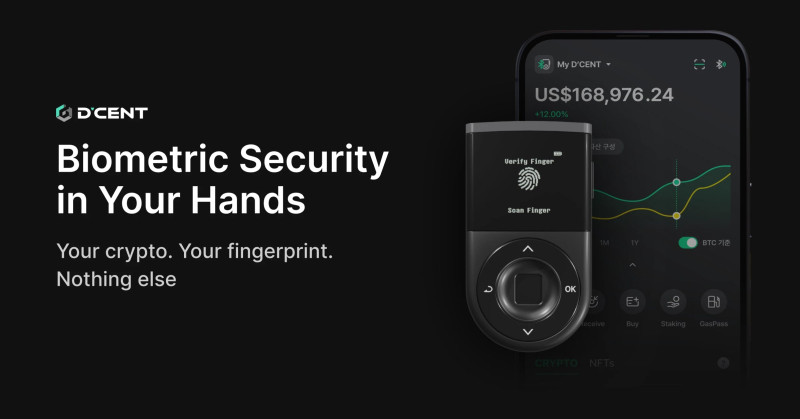
Old style hardware wallets only ask for a PIN. If someone watches you type it, your crypto is open. A fingerprint stops that since your print never leaves the device. D'CENT makes you give PIN and print, a two step lock. This dual step is something rivals only offer at a much higher price, if at all.
This matters more than folks think. If a thief knows your PIN but not your finger, they still can't move funds. Among the three brands, only D'CENT gives print auth at the low price. The others either skip it or charge a lot more for it. For phone-first users, fingerprint just fits the way we already unlock our phones.
Traditional hardware wallets rely solely on PIN codes. If someone watches you enter your PIN, your crypto becomes vulnerable.
Most Common Crypto Wallets You Will See
The most common crypto wallets fall into five broad types. Software wallets install on your computer and are free but die with the machine. Online wallets run in the cloud and are handy from any device. Mobile wallets are phone apps for pay on the go. Each type shows up in app stores and on exchange sites all the time.
Hardware wallets are small offline devices, and paper wallets are just printed keys. Each has a job. I like to match the wallet to the task instead of using one for everything. That keeps risk spread out. A software wallet like Electrum or Exodus is common, but back it up on more than one device or you lose it with the PC.
Five Wallet Types
- Software wallet: free app on PC, easy but lost if PC fails.
- Online wallet: cloud based, needs trust in the host's safety.
- Mobile wallet: phone app, fast for daily pay and trade.
- Hardware wallet: USB like device, offline and hard to hack.
- Paper wallet: printed keys, safe from net but easy to misplace.
What Are The Top Crypto Wallets For Saving
When you just want to park funds, what are the top crypto wallets people pick? Cwallet, Binance, Trust Wallet, and MEXC show up a lot. Cwallet gives strong lock and a clean look, plus it works on phone, web, and desktop. Binance has two-step login and cold storage behind the scenes. All four let you hold many coin types in one spot.
Trust Wallet backs up keys on your device and links to decentralized apps. MEXC adds multi-layer lock and built-in trade. Cwallet also shows market data and price alerts so you can watch your save grow. Binance adds staking to earn slow income on held coins. All of these are fine for saving if you use their safety features and don't skip backups. Pick the one that fits your coins and your phone.
Wallets Good For Saving
- Cwallet: strong encryption, multi-sig, and tracks market prices.
- Binance: cold storage, 2FA, and staking for slow growth.
- Trust Wallet: end-to-end lock and a built-in app browser.
- MEXC: layered lock, 2FA, and direct trade from the wallet.
Cwallet also gives multi-signature support and offline storage choices for extra peace. Binance keeps fees fair and adds regular updates. Trust Wallet has a busy community that answers new user questions. MEXC links straight to exchanges so you can move and trade without extra logins. Each of these can be the best safe crypto wallet for a saver who still wants to check prices now and then.
Best Place To Store Crypto For Travel
Taking your main hardware wallet on a trip can feel risky. I suggest a small travel wallet with just some spending money. Keep the big stack safe at home. You can even make a hidden wallet on your device with a passphrase for trips. That way a stolen device shows only the small fund.
The best place to store your crypto while abroad is a device that needs no cables and fits in a pocket. A phone wallet with limit funds works too. If your phone is stolen, the thief still needs your PIN or print. Just don't carry your life savings on the road. A pro tip is to use a passphrase to split travel funds from home funds on one device.
Why I Like Owning More Than One Wallet
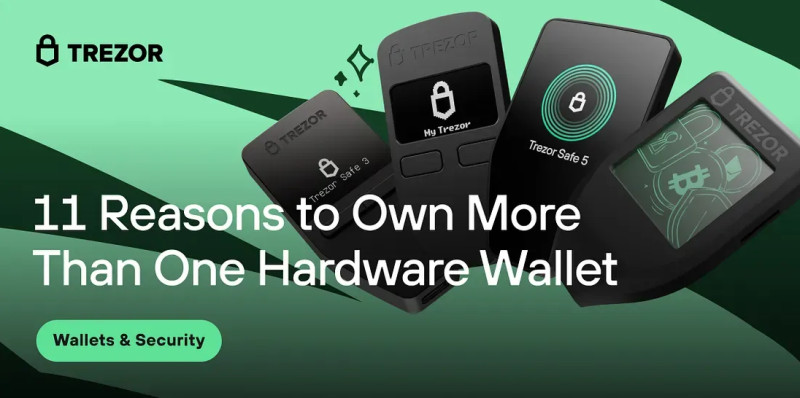
Putting all coins in one spot is a bad bet. Most folks should mix cold and hot wallets to spread risk. If you lose one key, you don't lose everything. It also helps privacy when you split uses. Many long term holders keep a separate device just for Bitcoin to cut clutter.
There are simple reasons to get a second device. A spare is a backup if the first breaks. You can gift one to a friend so they leave exchanges. You can keep trade coins apart from long term hold, or use one for business clear of personal funds. Some even set up multisig where many keys must sign, though that is not for beginners. A wrong multisig setup can lock you out for good, so be careful. Teaching is another reason to own two, a spare makes a live demo real. And for business, keeping company coins apart from your own makes tax time less of a mess.
Reasons For A Second Wallet
- Backup: restore fast if the first is lost or broken.
- Gifting: hand a friend a device to start self-custody.
- Trading: keep trade coins apart from long term save.
- Travel: carry a small fund, leave the rest at home.
- Inheritance: give family a device for later access.
- Multisig: need many keys to sign for top safety.
More wallets equals more responsibility. Keeping track of multiple devices and wallet backups requires careful management.
Search Crypto Wallet How To Pick
When you search crypto wallet online, the list is long. I cut it down by looking at a few things first. Check the safety: two-step login, print lock, or hardware link. Make sure the app is easy and supports your coins. A wallet that fits your phone system saves daily friction.
Look at who made it and what users say. A team that ships updates and answers questions is a good sign. Make sure you can back up with a seed phrase. Test their help desk before you need it. Also check if the wallet was reviewed by a third party for safety holes. These steps keep you from picking a dud. Start simple: one main wallet plus one backup device, and grow from there as you learn.
What To Check Before You Pick
- Safety: 2FA, biometrics, or hardware key support.
- Ease: simple screen, supports many coins in one place.
- Fit: works on your phone system, iOS or Android.
- Name: good user reviews and clean track record.
- Backup: seed phrase restore if device is lost.
Crypto Vault Vs Wallet
People ask me about crypto vault vs wallet and what the difference is. A wallet is the tool you use day to day to send and get coins. A vault is more like a locked box you rarely open, often cold storage with extra steps to pull out. Some call deep cold storage a vault to stress that it is slow on purpose.
In plain talk, your hardware device or paper keys act as the vault. The phone app is the wallet you carry. You don't need both words to be happy, just know that slow and offline means safer. I keep my vault at home and my wallet in my pocket. If you ever see the term "crypto vault," think "cold wallet I almost never touch." That simple shift in mind helps you decide what to put where.
How To Get A Coinbase Wallet And Others
Folks new to this often ask how to get a coinbase wallet or any first wallet. The steps are the same for most: download the app or buy the device from the maker's site. Write down the seed phrase on paper, never on a screenshot. Set a PIN or print if the device allows. The setup takes ten minutes if you read slow.
Start with a small amount to learn the send and receive flow. Once you trust it, move more to cold storage. The key is to get the wallet from the real source, not a random link. That one step stops a lot of theft. If a site asks for your seed phrase, close it, that is always a scam. Your seed is yours alone, no real wallet maker will ever ask for it. Take your time with the first setup and you'll avoid the rookie mistakes.
What Is The Most Popular Crypto Wallet
The what is the most popular crypto wallet question has a clear answer by scale. Ledger holds the biggest market share among hardware brands. Many people also start on exchange wallets like Binance or Trust Wallet because they are free and easy. Phone apps win on user count since almost everyone has a phone.
Popular does not always mean best for you. A big name can charge more for features like print login. I say match the tool to your need, not the ad budget. If you want wide coin support, Ledger fits. If you want cheap print lock, D'CENT fits better. And if you just want to learn, a free phone wallet is a fine start before buying hardware. The best safe crypto wallet is the one you will actually open and use right.
Fortanix Warm Wallet In Plain Terms
Back to the Fortanix option I mentioned. It is built for businesses that serve users, not just lone folks. The wallet adds a second factor through time codes in a safe compute zone. That means even if the backend is cracked, your coins don't move without your okay. It forms part of a wider web3 tool set they offer as a managed service.
It links with common web3 tools so firms can add it without a rebuild. The goal is to lower the trust you must place in the app maker. For wallet providers, it cuts the risk of a hack taking user funds. For a best safe crypto wallet that still feels quick, warm with human sign off is a smart mix. Users get to trust the provider more because the system can't spend alone. This kind of setup shows how warm wallets sit between the speed of hot and the safety of cold.
My Simple Rules For Staying Safe
I keep my own habits bare and plain. I never put a large sum in a hot wallet. I write my seed phrase on paper and lock it in a drawer. I update my apps when told. And I keep a spare device in case the first one dies. These few steps block most of the pain I read about in hack stories.
Backups are the thing most people skip, then regret. If your computer crashes and you have no seed, the coins are gone for good. A backup to recover keys is the fence that saves you from worst case. Don't skip this part, seriously. Many users also add a long password and need a second code for every transfer, which I think is smart. Keep the latest version of your software too, that alone blocks a lot of old bugs.
Your private keys must be properly protected to avoid disaster.
Picking What Fits Your Life
By now you see there is no one answer. A trader wants fast hot access. A saver wants cold and quiet. A traveler wants small and hidden. Match the wallet to the job and you cut most risk. Split your funds so one lost key is not the end of your stack.
I'd start with one good hardware device plus a phone app for spend. Add a paper or second device as backup. Keep learning the safety basics as you go. The best safe crypto wallet is the one you actually use right, not the one with the longest ad. Take your time, write down your seed, and you'll be ahead of most newcomers. Your call in the end, just make it a call you can live with if the net goes weird.
Comments on “How I Pick the Best Safe Crypto Wallet for Your Needs”
No comments yet. Be the first to share your thoughts.