fantom wallet review: how fWallet works, its security, and what to check

What the fWallet app is
I decided to write this fantom wallet review to understand the fWallet tool from Fantom for myself and share it. fWallet is a progressive web app you open at fwallet.fantom.network. It is not a bank. Fantom Operations Ltd runs it as a tech provider. They say the wallet does not hold your private keys or any personal info tied to those keys. That means you are in charge. If you lose your key, there is no reset button. I think that's both good and scary. In this fantom wallet review I want to keep things plain. You install some parts on your device and then you can use the wallet. It's free to access but you pay your own internet and network fees. Some folks might first wonder what a cryptocurrency wallet even is before they start. Simply put, it's a tool that holds keys to let you send and get tokens on a chain. fWallet is one such tool built for the Fantom chain. The app lives in your browser but pulls in local pieces so it can work fast and keep your keys off remote servers.
You might look up crypto wallet on your phone and see many names. This fantom wallet review looks at fWallet only. The app is part of the Fantom site and you agree to their terms when you use it. If you do not like the terms, they say do not make a wallet. And if you already have one, take your tokens out and delete it. I like that they are clear about it. The wallet is given as a licence to use on your own devices. You can't sell it or give it away. That's standard for software. They also note the software is provided as is, with no tangible copy shipped to you. You just run it where you are. That fits how most web apps work these days, but here the stakes are your money, so read slow.
Fantom wallet review of setup steps
Setting up fWallet is not hard but it is not like signing up for a normal app. You go to the site and download components to your device. There is no tangible copy. They call it a progressive web app. I found the steps plain: open the page, accept terms, and let it install local pieces. You must be at least 18 years old. By clicking accept you say you have that age and the right to agree. If you are used to apps like Trust Wallet , you will see some similarity but fWallet stays in your browser environment. No company holds your keys. That is a big point in this fantom wallet review. You write down your key or seed yourself. They will not recover it. The local install means your phone or computer does the heavy lifting, and you should keep that machine clean.
One thing I want to flag: the software is under development. They may push updates without notice. You might need to accept those or update other software. They say they will try to tell you by email or public channels about big changes. In my view, you should keep your device clean from malware. Use antivirus. This is on you, not them. The setup is light but the care after is heavy. When the app asks for an update, don't sit on it for weeks. A stale wallet can miss fixes. And remember, the licence is revocable if you break rules, but normal use is fine. I'd suggest a fresh browser profile for it if you can, just to keep things separate from random sites.
How fWallet keeps your keys
In this fantom wallet review I stress safety. The wallet does not store private keys on its servers. It does not grab personal info linked to keys. So there is no back door. That is good for privacy. But it means no recovery if you lose the key. I repeat: no recovery. Fantom says they can't unlock accounts or reset passwords. You alone guard the key. Your wallet address for crypto is generated local and shown to you. Keep it secret. If someone gets it they can move your funds. The chain does not forgive mistakes. A key is just a long string of letters and numbers. Whoever holds it owns the coins. That's the rule of self custody, and fWallet follows it strictly.
Fantom operates as a technology provider, not a bank or financial institution.
That quote sums it up. They are not your keeper. When you use fWallet you are the bank. This is true for many non-custodial wallets. Some ask which crypto wallet is most popular and assume the popular one is safe by default. Popular does not mean it watches your back. You still must secure your device. I tell friends: write the seed on paper, put it in a drawer, never snap a pic. Screens get hacked. The wallet shows your address so you can receive tokens, but the control stays with the key you hold offline in your head or on paper.
Fees and costs in this fantom wallet review
Let's talk money. Fantom gives free access to the wallet subject to their terms. You do not pay Fantom a fee to use the app. But you pay your own internet and mobile costs. Also, when you send tokens on the Fantom chain, there is a network fee. The source says Fantom was built for low fees compared to Ethereum. That is a plus. In my fantom wallet review I note the chain can do fast finality, about one to two seconds, and the fee is tiny. If you used Ethereum you know those gas fees hurt. Here it's lighter. Still, always check the fee before you send. The wallet shows the cost. Don't skip that part. A send of a few dollars might cost a fraction of a cent, but always look. The network fee goes to validators, not to Fantom the company.
When people look for the best spot to keep your crypto , cost is one part. But cheap is not everything. You need control and safety. fWallet gives control. The cost is low. That combo is nice. But remember the token itself can lose value. That is market risk, not a fee. Also, if you move tokens across chains or use weird contracts, extra costs can appear. Keep it simple at first. Send a small test amount, see the fee, then send the rest. That habit has saved me grief with many wallets, not just this one.
Rules you accept when using fWallet
By using the wallet you agree to supplemental terms on top of the main Fantom terms. These are legally binding. They can change the terms anytime. If you keep using it, you accept the new version. The date of the current version is shown upper left of the terms page. I find that a bit hidden but okay. You must be 18 plus. You represent you have the capacity to assent. They prohibit use in places where it's not legal. You are solely responsible for following your local laws. This fantom wallet review reminds you: don't assume it's allowed everywhere. Some regions block crypto tools, and the wallet won't warn you at the door. You click and you own the risk. They also say they may stop the service with at least 30 days notice, and support may linger up to three months after, unless a big risk appears.
Key user duties from the terms
- Protect your device from malware and keep antivirus up to date
- Secure your private keys and passwords by yourself
- Pay your own internet and network fees
- Check for software updates and install them
- Follow all laws in your area when using the wallet
Those points are not optional. They are the deal. If you fail, you lose funds and they owe you nothing. I'm not trying to scare you, just keep it real. The terms also say you indemnify Fantom for losses from your misuse. That means if you break the rules and they get sued, you cover costs. Harsh but clear. So treat the wallet like a sharp tool, not a toy. Read the small print once so you know the lines. Then go back to using it for simple sends and receives, which is what most of us do.
Things you must not do with the wallet
The terms list many prohibited acts. I'll cover the main ones in this fantom wallet review. You can't sell, rent, lease, or transfer the wallet software. You can't take it apart or reverse engineer it. You can't scrape data or build a competing wallet from their code. You can't post unlawful or hateful content through it. They also say no impersonation or infringement. Basically, use it for your own personal or internal business use, not to exploit. The language is strict, but it mirrors how most software licences read. The difference is the money part makes it feel heavier.
Prohibited use examples
- Licence, sell, rent, or lease the wallet software
- Reverse engineer, decompile, or disassemble the code
- Scrape or download data from the wallet app
- Publish unlawful, threatening, or defamatory content
- Remove copyright or proprietary notices
Break these and they can terminate your access. They may also seek defense costs from you. So play fair. This is not a playground for tricks. I'd add a plain tip: don't use the wallet inside a work machine where your boss might see code you shouldn't touch. Keep it on your own phone or laptop. And never paste your key into a form on a weird site. The terms say neither Fantom nor third parties will ask for your credentials. If someone does, it's a scam. That's true for any wallet, but worth saying loud in a fantom wallet review like this.
Safety risks I see in the fine print
Now the risk section. The source lays out assumption of risks clearly. I'll paraphrase in my fantom wallet review. First, technology risk: crypto systems have flaws, transactions are final, and hackers exist. Second, token risk: tokens are not government backed, not insured, and can be stolen via bad software. Third, market risk: value can drop to zero. Fourth, regulatory risk: laws can change and hurt use. Fifth, security risk: you must keep keys confidential. All these sit with you. The chain itself is public, so a wrong send goes to a dead address forever. No bank will reverse it. That is the trade for speed and low fees.
The Wallet is provided AS IS, AS AVAILABLE, with all faults. No warranties.
That quote is from the terms. It tells you they give no guarantee. So if you look for the best wallet for digital currency with a safety net, this isn't that. It's a tool, not a guard. You must do the guarding. I sleep better when I keep small amounts in such wallets and larger sums in cold storage. But that's my habit, not advice from the source. The source just says you take the risk. They also note third party apps may be inside the wallet experience, and those have their own terms. Fantom doesn't control them. So when you click out to a dApp, you are on your own again.
Fantom blockchain and why speed matters
To understand fWallet you should know the Fantom chain. Fantom is a blockchain platform founded in 2018 by Ahn Byung Ik, a South Korean computer scientist. Its aim was better speed and lower fees for dApps than Ethereum. The chain uses aBFT consensus (Asynchronous Byzantine Fault Tolerance) which gives quick finality and high throughput. They claim up to 300,000 TPS with DAG tech, though real use shows thousands per second with 1-2 sec finality. The own coin is FTM. It powers trades like Ether on Ethereum. This matters for the wallet because the wallet connects to that fast chain. In my fantom wallet review I see speed as a strong point. A send feels near instant, which beats waiting minutes on some older networks. The EVM compatibility means apps built for Ethereum can move over with small changes, so the wallet can talk to many tools.
Some competitors like Cardano, Solana, and Ethereum 2.0 also race for speed. But Fantom's EVM compatibility lets devs move Ethereum apps over. That helps users too. If you came from top crypto wallet lists , you may have seen Fantom mentioned for its low fee and quick confirmations. The chain's Opera mainnet runs Solidity, the same coding language as Ethereum. That lowers the barrier for builders. For a wallet user, more builders means more places to spend or stake tokens. Just remember the chain's health ties to the token's price, and that can swing hard. Speed doesn't remove market risk.
Pros and cons from my fantom wallet review
Let's weigh it. The source gives clear pros and cons for the Fantom chain, which affect the wallet. Pros: speed, low fees, rewards for users, wide exchange listing, EVM interop, fast tx. Cons: high node cost (millions FTM to run node), stiff competition, limited use cases beyond DeFi, high inflation early on, strong rivals. For a normal user, node cost doesn't matter. But competition means the wallet could be less supported if chain loses ground. I think the pros help everyday use. The wallet rides on the chain, so if the chain is quick and cheap, the wallet feels quick and cheap. That's the main take for me.
Pros of the Fantom ecosystem for wallet users
- Speed: thousands of transactions per second with 1-2 sec finality
- Low fees compared to older chains like Ethereum
- Rewards for users and creators that build liquidity
- EVM compatible so many apps work
- Listed on many exchanges for easy token access
Cons to keep in mind
- High cost to run a node (over 3 million FTM)
- Strong rivals like Solana and Cardano
- Focus mostly on DeFi, not broad use
- Token inflation history raises questions
None of these are deal breakers for a casual holder. But know them. When you search for best software wallet crypto , you should compare such tradeoffs. A wallet is only as good as the chain beneath it. fWallet is light, free, and direct. If the chain thrives, the wallet stays useful. If not, you still hold your keys and can move coins to another network via bridges or swaps. That exit path is part of self custody. I'd rather have that than ask a company to free my funds.
What happens with FTM and Sonic migration
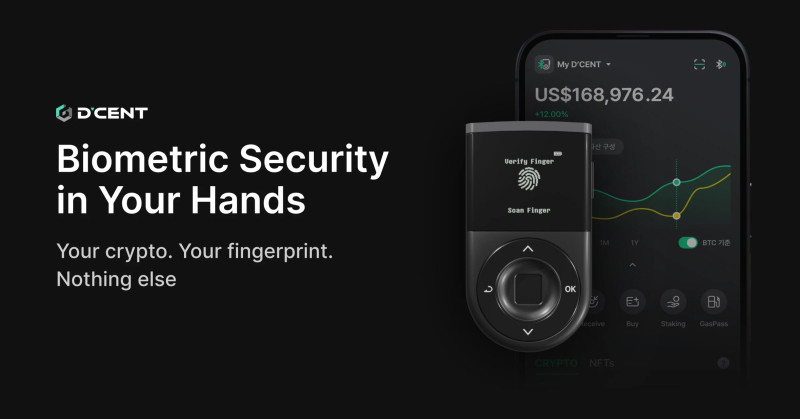
Here is a side note from the source that touches fWallet users. Fantom's token FTM migrated to a new chain called Sonic. Sonic mainnet launched in December 2024. It's an EVM compatible layer-1 with high speed. The FTM token became S token at 1:1 ratio. For a while, users could swap via a portal. The source shows D'CENT Wallet as a simple way to migrate, supporting both networks. This is not fWallet itself, but if you held FTM in fWallet you may need to move them out to a wallet like D'CENT to upgrade. I include this in the fantom wallet review so you aren't caught off guard. The swap had a window: both ways for a period after launch, then one way. Check current state before acting. The point is the token you held may have moved chains, and your old wallet might not show the new coin unless you take steps.
Steps to migrate using D'CENT as per source
- Create a Sonic account in the D'CENT app
- Open Discovery tab and visit the upgrade portal
- Connect your wallet and approve the pop-up
- Enter FTM amount and execute the swap to S
This takes a few minutes per the source. I'm not saying you must use D'CENT, but it's one path. The point: fWallet may not be the tool for this migration. Plan ahead. Some might ask how to get a Coinbase wallet instead, but that's a different custodial path. Your call. The Sonic chain claims 10,000 TPS and gives incentives. If you stay in the Fantom world, you'll likely meet Sonic sooner or later. Keep your keys safe during any move. A migration is just a send with extra steps, and sends are final.
Comparing fWallet to other crypto wallets
In this fantom wallet review I like to place things in context. There are many wallets. Some are hardware, some software, some on phone. fWallet is a web app you load locally. It's non-custodial. When folks ask what the top crypto wallets are they often mean ease and support. fWallet is light but gives no hand-holding. If you want a best software wallet for crypto with a big brand, you might look elsewhere. But for Fantom chain use, it fits. Apps like Trust Wallet cover many chains; fWallet focuses on Fantom and now Sonic via migration tools elsewhere. That focus can be a plus: fewer buttons, less clutter. But it means you need another wallet for Bitcoin or other coins.
The best spot to store your crypto is where you keep control and understand the risks. fWallet does that. Just don't lose your key. I'd say for new users, start small. Learn the address, the fee, the send step. Then scale up. If you came in searching what a cryptocurrency wallet is , think of fWallet as a plain example: it makes a key, shows an address, and lets you sign sends on one chain. No account with a password reset. That's the core of self custody, dressed up as a web app. Other wallets add features, but the base is the same.
Common pitfalls to avoid with fWallet
Let's end with pitfalls I pulled from the terms. Don't assume recovery exists. Don't share keys. Don't use if under 18. Don't ignore updates. Don't use in banned areas. Don't expect Fantom to bail you out. This fantom wallet review is clear: the wallet is a tool, you are the boss. If you keep that mind, it's fine. A common mistake is to install it on a shared computer and walk away logged in. Bad idea. Another is to click a fake site that looks like fwallet but steals keys. Always check the URL. The source says the real one is at fwallet.fantom.network. Bookmark it. Don't trust search ads.
Fantom disclaims responsibility for the Wallet.
That line is blunt. I respect it. They tell you upfront. So you act with care. If you came looking for what a cryptocurrency wallet is basics, now you have a real example. fWallet shows both the power and the weight of self-custody. I'll keep using it for small Fantom sends because it's fast and free. But my big stack sits offline. That split works for me. You do you, just don't say nobody warned you about the fine print. The terms are long for a reason, and the reason is they truly won't help if you mess up. Read, then act.
Comments on “fantom wallet review: how fWallet works, its security, and what to check”
No comments yet. Be the first to share your thoughts.