How I Pick Safe Exchange Sites for Cryptocurrency Trading
Exchange Sites for Cryptocurrency and Why I Care
Choosing the right exchange sites for cryptocurrency can feel like a big mess when you first look. There are so many names out there, and not all of them treat your money the same way. Some look slick on the outside but hide weak security behind the pretty screen. Others charge fees that eat your gains without you even noticing the cost. I was reading public research on how these platforms work during last couple weeks, and I decided to walk through what I look at before I trust a platform with my coins.
The short version is this: not all exchange sites for cryptocurrency are built the same. A few have strong custody and clear rules that you can verify. Many have weird fee layers that only show up after you trade. Some list coins you never heard of and may not want to touch. When you know what to check, the choice gets a lot easier. And you sleep better at night knowing your assets sit in a place that does the basics right instead of cutting corners.
My goal in this post is simple. I will explain what matters when you pick a spot to trade. I will use plain words and real details pulled from public studies on adoption, architecture, and regulation. No hype, no sales pitch, no fancy terms stacked to sound smart. Just the stuff that helps you trade with more confidence and avoid the worst traps that catch new users.
What the Global Adoption Stats Show
A recent Chainalysis global crypto adoption index puts India at the top and the United States right behind it. The index mixes a few measures to get the rank. It looks at value sent to centralized services, retail activity on those services, DeFi use, and big institutional flows. They weight each part by country income on a purchasing-power basis so smaller places still show real use instead of just raw size favoring rich nations.
The method changed a bit over time. One retail DeFi measure got dropped to better show everyday user activity rather than complex yield farming. A new institutional measure was added to catch large flows above one million dollars. That shift tells us the researchers care about both small users sending remittances and big money moving through exchange sites for cryptocurrency on a weekly basis.
Past year showed huge growth in Asia Pacific. On-chain value there jumped about 69 percent in a twelve month span, climbing from 1.4 trillion to 2.36 trillion in total received. India, Vietnam, and Pakistan led that push with strong retail demand. Latin America grew fast too, with a 63 percent climb. Sub-Saharan Africa rose 52 percent. North America and Europe also grew, though a bit slower at 49 and 42 percent. Crypto is not just a rich-country thing anymore, and that changes how we should judge the reach of these platforms.
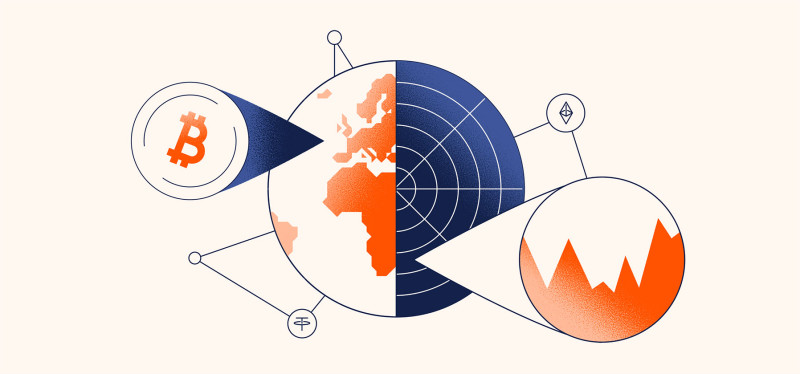
When the data is adjusted for population, Eastern European nations take the lead. Ukraine, Moldova, Georgia, Jordan, Hong Kong, China, Vietnam, and several others show the highest per-person use. This fits a pattern where people in places with shaky local money or limited bank access turn to crypto for savings and transfers. It also shows exchange sites for cryptocurrency serve many different needs around the world, not just speculators in big cities.
Stablecoins stay at the center of daily use. Tether and USDC handle most of the volume, with averages near 700 billion a month and peaks past one trillion in busy months. USDC alone ranges from 3.2 billion to 1.54 trillion monthly. Smaller ones tied to the euro or other assets are starting to grow as well. One euro-backed coin grew close to 76 percent in a single month to reach 9.2 billion. When you pick exchange sites for cryptocurrency, you will likely touch a stablecoin at some point, so check which ones they support and how they redeem them.
More than 300 million people now use crypto on a regular basis across the world, with adoption spread across income brackets.
Adoption spans almost all income groups. High, upper-middle, and lower-middle income countries show steady growth at the same time. That broad base says this is not a fad of one wealthy group playing with tech. Low-income countries see more ups and downs from policy shocks, bad internet, or conflict, but they still show real engagement. The point is clear: exchange sites for cryptocurrency matter to regular people everywhere, and the platforms that win will be the ones that serve all these users without friction.
How Fiat Exchanges Bring in Real Money
When people use fiat exchanges to turn dollars or euros into crypto, Bitcoin still leads by a wide margin. In a recent twelve month window, Bitcoin made up over 1.2 trillion in fiat inflows on centralized exchanges. That was more than 70 percent higher than ETH's number at 724 billion. Other layer-1 coins and stablecoins sat well behind, each under 600 billion in the same period.
This matters because the best platforms for crypto trading tend to have deep Bitcoin pairs and fast fiat ramps. If you plan to move real money in and out, check that the spot you pick handles the coin you want with good volume. Thin markets can cost you on the spread, and a slow fiat withdrawal is a pain you do not need. I always test a small deposit and withdrawal before I trust a new venue with size.
Fiat on-ramps are where most new users meet exchange sites for cryptocurrency for the first time. The experience needs to be clear. You should see the rate, the fee, and the time to settle before you confirm. If a platform hides those, that is a red flag for me. Good fiat support is not just about listing the option, it is about making it work without surprises or locked funds.
Core Parts of a Centralized Exchange
A centralized exchange, or CEX, runs on a few core parts working together. The trade engine takes orders and matches them using specialized messaging. The order book shows open bids and asks. A trade feed records what already filled, with price, volume, time, and direction. Market data from outside helps set fair prices so the book stays honest even when one side gets eager.
There is also analytics for the user view, plus liquidity providers who keep the book deep. And there is security on every step from sign-up to withdrawal. When I look at exchange sites for cryptocurrency, I like to know these parts exist under the hood, even if I never see them directly. A missing piece usually shows up later as a bad experience or a lost fund that nobody can explain.
Six pillars of a CEX
- Trade engine that matches buy and sell orders fast via microservices
- Order books and trade feeds that show live and past fills
- Market data feeds from outside sources for fair price discovery
- Analytics that power dashboards, reports, and pattern detection
- Liquidity providers who stabilize price and tighten the spread
- Security and monitoring across onboarding, trading, and off-boarding
The engine itself is often built as stateless services that just process and match. Blockchain nodes and wallet services act as custodians for user assets on the back end. That split lets the front end stay quick while the custody side stays careful. It is a design choice you can ask about if a platform publishes its architecture, and many do these days because it builds trust with serious users.
How Exchange Sites for Cryptocurrency Are Built on the Cloud
Many modern exchanges run on cloud services instead of their own bare metal. The trade layer uses web tools for the interface, a content network for fast global load, and auto-scaling servers for the heavy work during busy hours. Core trading services run in containers that spin up as need grows. Blockchain nodes and wallet security use special key management and isolated hardware spaces to stay safe.
Storage spreads across several services. Transaction data goes to relational databases. Hot pricing sits in fast cache so the book updates without lag. User profiles go to a key-value store. Search and object storage handle the rest. This mix keeps exchange sites for cryptocurrency quick even when many users trade at once, and it lets a team add features without rebuilding everything from scratch.
Market data flows through streaming tools that push price changes in real time. External provider links use private network paths to stay safe from snooping. Pre-trade analytics pull from data lakes and machine learning tools to spot issues. Security monitoring covers metrics, logs, tracing, firewall, and threat detection across the whole system. It is a lot of moving parts, but that is what keeps your trades safe and smooth behind the simple screen you tap.
Security Inside Exchange Sites for Cryptocurrency
Private key safety is the big worry for any exchange that holds user coins. One method uses hardware-isolated spaces where signing keys are made and stored without touching the main system. This cuts the risk of key leaks a lot. It meets strict needs for money-grade custody, which is exactly what you want from a place holding your savings for the long haul.
I will say this plain: if a platform cannot explain how it guards keys, I do not put large funds there. You should ask. Hey, don't skip this part when you compare exchange sites for cryptocurrency. A clean answer with details about cold storage and isolation is a good sign. A vague answer about bank-grade security with no proof is not enough for me, and it should not be for you either.
Hardware-isolated key signing dramatically reduces the risk of key leakage for custodians and exchanges.
Beyond keys, good platforms enforce multi-factor login, IP whitelisting, and rate limits. They keep most assets in cold storage away from the web. They run audits and publish results. Some even use hardware security modules or cloud key management to sign without exposing the private material. When you see these layers named, you know the team thought about the scary parts, not just the pretty charts on the home page.
What I Check Before Using an Exchange
There are a few clear things to look at. Security comes first: insurance, audits, cold storage, and multi-factor login. Then regulatory standing: licenses, KYC steps, and open reports. Then fees, coin support, liquidity, and the feel of the app. I rank them in that order because a fast app means nothing if the place vanishes with your coins overnight.
For fees, I hunt for low fees crypto pairs so I keep more of my money after trades. A crypto buying platform with clear pricing beats one that hides costs in the spread. And the best crypto buying platform for me shows the fee before I click buy, not in a help page I have to dig for. Transparent cost is a sign of respect for the user, and I reward it with my attention.
Factors for picking a safe exchange
- Security model with insurance, audits, cold storage, MFA
- Regulatory compliance with licensing and KYC/AML steps
- Fee structure across trades, deposits, and withdrawals
- Asset support for the tokens and standards you need
- Liquidity and depth to cut slippage on big orders
- User experience with good app, docs, and support
Asset support sounds basic but it trips people up. If you want a specific token, check the standard it uses, like ERC-20 on Ethereum or BEP-20 on BNB Chain. Not every platform lists every standard. Liquidity matters too. A long order book with many price levels means your trade fills near the price you see. Thin books move against you on size, and that hurts more than most newcomers expect when they first use exchange sites for cryptocurrency.
Decentralized and Hybrid Choices
Some folks skip the middleman and use a DEX, or decentralized exchange. That gives self-custody, meaning you hold the keys. But you often lose speed and easy fiat ramps. You also take on more duty to not mess up a transaction. For new users, that can be scary and costly if a typo sends coins to a dead address with no help desk to call.
Hybrid models try to mix custodial speed with on-chain settlement. For many users, that middle ground works fine. You get quick trades and a clear exit to your own wallet. When I review exchange sites for cryptocurrency, I note which model they use because it changes who bears the risk. Custody is not just a tech term, it is about who can lose your money and who answers when things go wrong.
If you ever wonder where to buy Flare crypto , you may need a mix of venues. Smaller tokens do not sit on every platform. Check a CoinGecko crypto exchange list to see which spots list the coin before you sign up. That five minute check saves you from opening an account you will never use. It also shows you the real volume, not the number a venue claims on its homepage to look busy.
Starting Your Own Exchange
Maybe you think about building one. A basic version can cost around 25 thousand if built in lower-cost regions with a small team. A full platform in the US or Western Europe can run up to 400 thousand. That gap is real and worth knowing before you draft a plan or talk to investors about exchange sites for cryptocurrency and the money it takes to do it right.
You need a clear business model up front. Options include a broker-dealer, a white-label setup, a peer-to-peer market, or a hybrid. You pick token standards early, with ERC-20 dominating for fungible assets on Ethereum. The trading crypto sites you see today spent real money on compliance and liquidity, not just the front end that you tap on your phone each morning.
Basics for launching a CEX
- Define business model: broker, white-label, P2P, or hybrid
- Pick token standards early like ERC-20 for Ethereum assets
- Get licenses and build KYC/AML workflows with ID checks
- Use cold storage and HSM or cloud key management for keys
- Add MFA, IP limits, and rate limiting for account safety
- Offer clear fees and dispute help for everyday users
Liquidity is the hard part for a new venue. You can integrate professional liquidity providers or adopt a hybrid P2P model with escrow. Price discovery that blends an order book with DEX liquidity helps a thin market feel alive. Without this, your users see empty books and leave, and no amount of marketing fixes a dead order book on exchange sites for cryptocurrency that nobody wants to trade on.
US Rules for Trading Crypto Sites
In the US, a few agencies touch crypto. The IRS treats coins as property for tax, so every trade can be a taxable event. The SEC watches securities offerings and token sales. The CFTC handles derivatives and commodity crypto products. FinCEN enforces money-transmitter rules and AML reporting. The OCC charters trust banks for stablecoin issuers. The FTC handles consumer protection and ad claims that cross the line.
People often ask does E*Trade sell crypto . The answer depends on what the broker registered to do under these agencies. Not every stock app is a crypto venue, even if it mentions digital assets in a newsletter to look current. And if you want to open Coinbase , you go through their KYC like any regulated exchange, with ID checks and monitoring from day one of your account.
Federal agencies that touch crypto
- IRS treats crypto as property for tax purposes on trades
- SEC oversees securities offerings and token disclosures
- CFTC regulates derivatives and commodity crypto products
- FinCEN enforces money-transmitter and AML reporting rules
- OCC charts trust charters for stablecoin issuing banks
- FTC handles consumer protection and advertising standards
State-level help exists too. The National Conference of State Legislatures keeps annotated guides for state crypto laws from the mid 2010s. Congressional research papers from 2018 cover blockchain background, CFTC rulings, and securities law for token sales. Books like Blockchain and the Law from 2018 give deeper reading. These are old but useful because the core legal questions have not changed much since then for everyday users of exchange sites for cryptocurrency.
What One Big Exchange Suggests for Clear Rules
Coinbase put out a roadmap for clearer rules that I find worth knowing. They want stablecoins issued under state or national trust charters with one-to-one reserves in safe assets. They want annual audits and sanctions screening. They want exchanges to have federal licenses that work across states and the EU, with clear fee disclosure and asset safeguards that users can actually read and understand.
Their view keeps DeFi and self-custody wallets as software, not money transmitters. That leaves room for builders. But they say offshore platforms serving local users must follow the same rules. A fair point, I think, because a gap just pushes risk onto users of exchange sites for cryptocurrency who may not know where a site is based or who would answer if funds went missing.
Coinbase roadmap points
- Stablecoins with 1:1 reserves and annual outside audits
- Exchanges with federal license and transparent fee structures
- Updated Howey test for deciding if a token is a security
- CFTC and SEC publish top asset categories fast after law
- Level field for offshore platforms serving local users
- Protect DeFi, wallets, DAOs as software under free speech
Regulatory clarity, enforced uniformly, is essential for sustainable growth while still allowing space for decentralized experiments.
One detail from the footnote side: KYC and AML programs recover less than 0.2 percent of illicit funds, while compliance costs run more than one hundred times the amount recovered. That is a weird fact that does not mean we drop the rules. It means the rules should be smart and shared so the cost is not wasted. I mention it because users pay those costs in fees, one way or another, on most exchange sites for cryptocurrency they use.
Free Tools to Watch the Market
You do not need to pay for basic news. CoinTelegraph and CoinDesk give daily updates and policy news. A CoinGecko crypto exchange page helps you compare coins and venues side by side with real volume. The Law Library of Congress has public reading rooms too if you want primary sources on regulation rather than second-hand takes from social media threads.
For deeper work, Westlaw and Bloomberg Law exist but need a subscription through a school or firm. I stick to free reads most days. They tell me when an agency shifts its stance, which changes how I use exchange sites for cryptocurrency. A rule change in one agency can move the whole market, so a quiet reader stays ahead of the panic seller who only hears about it after the drop.
Why Adoption Spans Income Groups
Crypto use shows up in high, middle, and lower-middle income countries at the same time. That broad base says this is not a fad of one group with extra cash to burn. The data shows synchronized growth across these brackets, which is rare for a new financial tool that often starts with the wealthy before it spreads outward to everyone else slowly.
This is why I care about plain access. A good crypto buying platform should work for a first-time user in any country with a phone and some local money. Complicated onboarding just shuts people out. The exchange sites for cryptocurrency that win long term will be the ones that keep the door simple without dropping safety or hiding the true cost of a trade.
Low-income countries show more volatility tied to policy shocks or conflict. That is not a reason to avoid them, it is a reason to build better tools. When a local currency fails, crypto can bridge a gap for a family. But the platform must be solid, because those users can least afford a careless loss from a weak link in the custody chain.
Performance and Latency Behind the Scenes
Fast matches matter more than most users notice. Exchanges tune their servers and network to cut tail latency, which is the slow worst-case time. Small gains in speed can mean better fills for active traders who move size. The trade engine sits at the heart of that work, and the order book feeds it every millisecond of a busy session.
I am not a speed freak, but I notice when an app feels laggy during busy times. That lag often traces back to weak architecture or poor caching. Solid exchange sites for cryptocurrency invest here even if we don't see it on the screen. They test p99.9 latency and push for double-digit percent cuts, because a slow fill is a real cost to the user who got slipped on price.
Cloud setups help here. Auto-scaling adds capacity when traffic spikes. Cache holds hot prices so the book does not rebuild from scratch. Isolated hardware speeds up signing without risk. None of this is glamorous, but it is the difference between a platform that holds up and one that falls over when the market moves fast and everyone tries to trade at once.
Consumer Loyalty and Crypto Entry
Some brands now let members turn loyalty points into crypto. That gives a simple entry without fresh cash from your bank. You learn, hold, track, and earn inside one place. It is a quiet trend, but it brings new people into exchange sites for cryptocurrency who would never open a regular account out of fear or confusion about the first step.
One example from public info is a platform that lets members buy crypto with points, store assets, track performance, learn, and earn more. Brands get new users and fresh revenue from conversion fees. Members turn unused points into assets that might grow. If your favorite program offers this, it might be the easiest first step you take into the space without risking your rent money.
Just check which exchange sites for cryptocurrency they use to custody the coins. The brand is not always the custodian, and that is the part that matters for safety. Ask who holds the keys. A loyalty perk is only as good as the custody behind it, and I would not trade that fact away for a few bonus tokens that could vanish with a weak partner.
My Take on Picking a Safe Spot
After all this, my method is simple. I check security, then licenses, then fees, then coin list, then liquidity, then app feel. If a platform fails the first two, I walk away no matter how nice the bonus looks or how slick the ad was. The rest I weigh by my own needs and how I plan to trade from month to month.
Exchange sites for cryptocurrency will keep growing as adoption spreads across the map. The tools to pick well are free and the signs are clear if you slow down to read them. Take your time, ask the hard questions about custody and rules, and you will trade with more confidence than the person who jumped in on a banner ad and hoped for the best.
Comments on “How I Pick Safe Exchange Sites for Cryptocurrency Trading”
No comments yet. Be the first to share your thoughts.