How to Compare the Best Crypto Trading Apps, Wallets, and Bots
What to Look for in a Crypto Trading App
Picking the best app for crypto trading starts with knowing what you actually need. These apps do different jobs. Some handle buying and selling, others hold tokens, and some run automated strategies. The best app for crypto trading depends on your goals, your risk tolerance, and how much time you want to spend watching charts.
More than 420 million people worldwide own some form of cryptocurrency, and the market runs 24 hours a day. Prices can move fast, and you often need access from your phone. That is why the right app matters - it is not just about fees, though fees matter a lot. The apps for crypto trading balance cost, function, and ease of use.
Crypto App Categories and What They Do
The available crypto trade apps fall into a few clear groups. Brokerage and exchange apps let you buy, sell, or hold crypto, and some also support stocks, ETFs, retirement accounts, cards, lending, or staking. Self-custody wallets give you control over private keys while holding and transferring tokens, sometimes with built-in swaps, DeFi access, hardware-wallet support, and multi-chain function. Dedicated tracking apps show prices, balances, graphs, and alerts but do not trade for you. On-chain and social trading apps mix token discovery, wallets, swaps, perpetual futures, prediction markets, creator tokens, and social feeds. Trading bots connect to exchanges through APIs to automate strategies, and AI bots add machine learning on top. A crypto coin trade app can handle swaps and simple trades in one place.
A cryptocurrency wallet application is one piece of this puzzle. It holds your tokens and can make swaps, but it is not the same as an exchange. A cryptocurrency exchange app handles buying and selling with more order types and deeper liquidity. Knowing the difference helps you pick the right tool for each job.
App categories at a glance
- Brokerage / exchange apps - buy, sell, hold crypto, sometimes stocks and ETFs
- Self-custody wallets - you control private keys, hold and transfer tokens
- Tracking apps - prices, balances, graphs, alerts, no trading
- On-chain / social apps - token discovery, swaps, perpetuals, prediction markets
- Trading bots - connect via API, automate strategies, AI adds adaptation

Security and Custody
Security is non-negotiable. Look for whether the app is licensed and regulated, whether it supports two-factor authentication, and what percentage of customer funds sits offline in cold storage. You should also check who holds the private keys, whether cold wallets use multi-signature controls, and whether proof-of-reserves audits get published.
A self-custody wallet shifts risk to you. You must protect the seed phrase and private keys. No legitimate wallet, exchange, or support agent should ever ask for your seed phrase. Robinhood crypto is not protected by FDIC or SIPC, and the same is true of most exchanges. That is not a reason to avoid them, but it is a reason to understand what you are signing up for.
Security is described as non-negotiable. Check licenses, 2FA, cold storage, and proof-of-reserves before you commit.
Security checks to run
- Licensed and regulated in your jurisdiction
- Two-factor authentication supported
- Percentage of funds in cold storage
- Who holds the private keys
- Multi-signature controls on cold wallets
- Proof-of-reserves audits published
- API permissions can disable withdrawals
- Security record and breach history
Fees and Total Trading Cost
A full fee comparison should cover maker and taker trading fees, market maker or smart-order routing charges, bid-ask spreads, and markups on instant buys. Also check deposit and withdrawal fees, network or gas fees, and subscription costs for bots or advanced apps. Fees for crypto-backed loans, staking rewards, card rewards, and bridge costs all add up.
The total cost for your typical trade size matters more than a low headline rate. A platform with a 0.25% maker fee may still cost more for a large instant purchase than a limit order through the pro interface. Cross-chain bridges, payment providers, and gas costs can change the final cost of a wallet transaction.
Asset Selection and Trading Scope
Coin count is one differentiator, but useful asset selection goes beyond the number of listed coins. Compare major assets like Bitcoin and Ethereum alongside stablecoins, fiat pairs, and smaller altcoins. Check whether the app covers equities and ETFs, DeFi assets, and assets on different chains. Spot markets versus futures and perpetuals, prediction markets, tokenized assets, and social or creator coins all matter depending on your style.
Robinhood supports fewer than 50 digital assets, or around 45 coins. Alternatives range from Fidelity's five coins to Kraken's 550 or more. Kraken and Crypto.com also offer trading products that go beyond a simple spot coin list. If you want the cryptocurrencies on robinhood to be enough, that is fine for basics - but power users will hit the limit fast.
Robinhood and the Alternatives
Robinhood is known for commission-free stock trades, a clean mobile interface, and crypto access. The crypto side is narrower than dedicated exchanges. It supports about 45 coins in the United States, compared with Kraken's 550 or more and Crypto.com's 425 or more. Robinhood restored Ethereum and Solana staking for U.S. customers at one point, but futures, crypto margin, advanced orders, and coin transfers remain limited. The service faced scrutiny over the 2021 GameStop incident and received a FINRA fine for multiple rule violations, including AML failures and inaccurate trade disclosures.
You can send crypto with robinhood , but the options are narrow. If your main need is combining stocks and crypto in one place, Robinhood works. If you want deep crypto function, a dedicated exchange or a crypto coin exchange app is a better fit.
Robinhood is convenient for investors who want stocks and crypto together. But its crypto offering is narrower than dedicated exchanges.
Crypto-Backed Loans and Liquidity
CoinRabbit is presented as a crypto-backed lending platform rather than a conventional exchange. A borrower deposits crypto as collateral and receives funds in supported fiat currencies. The example given is an investor holding 1 BTC who needs cash for a business expense. Instead of selling the BTC, the investor deposits it as collateral, keeps ownership, and receives a loan. If Bitcoin price rises while the loan is active, the borrower keeps the position and upside, subject to loan terms.
CoinRabbit supports more than 350 cryptocurrencies as collateral, including BTC, ETH, SOL, and hundreds of altcoins. Loans process in 10 to 15 minutes after collateral confirmation. The APR starts at 17% and is fixed for the loan term. Borrowers can pick short-term loans of up to 30 days or keep an open loan longer. The platform states it never rehypothecates collateral. Cold wallets with multi-signature protection hold the collateral. 24/7 live support monitors loans and notifies borrowers if collateral approaches a risk zone. The broader CoinRabbit ecosystem includes a wallet, exchange, stablecoin savings account paying 5% APY with daily compounding, and a Private program for large holders. No credit check or complex paperwork is required. The stated drawback is that CoinRabbit is not a high-frequency exchange - users who want to buy and sell dozens of coins throughout the day would need to pair it with a trading platform.

Exchange-Style Apps Compared
Fidelity manages trillions in assets and serves tens of millions of customers. Its crypto offering includes direct trading through Fidelity Crypto and a unified dashboard for stocks, ETFs, mutual funds, retirement accounts, and crypto. Supported assets are Bitcoin, Ethereum, Litecoin, Solana, and the Fidelity Digital Dollar stablecoin. Trading has no commission but applies a 1% spread, with a minimum trade of $1. Custody is handled by Fidelity Digital Assets, an OCC-chartered national trust bank. A Crypto IRA lets you hold Bitcoin in a tax-advantaged retirement account. The drawback is the limited five-coin selection - Fidelity is a stock broker first and a crypto platform second.
eToro has more than 38 million users across over 100 countries. Its CopyTrader feature lets you replicate trades of top-ranked investors automatically. Available features include more than 100 cryptocurrencies globally, stocks, ETFs, Smart Portfolios with themed strategies, and a built-in crypto wallet. The crypto trading fee is 1% per buy or sell, with a $5 withdrawal fee and a regional minimum deposit of $50 to $200. Drawbacks include no retirement accounts, no complex order types, and limited standard-tier support.
Kraken has operated since 2011 and is described as never having lost customer funds to a hack. The platform lists more than 550 cryptocurrencies, margin trading, futures with leverage up to 50 times, and more than 11,000 U.S. stocks and ETFs for eligible users. Kraken Pro fees start at 0.25% maker and 0.40% taker, with volume-based discounts. Instant buy costs a flat 1%. Staking is available on 21 coins with rates up to 22% APY. Security includes ISO/IEC 27001 certification and SOC 2 Type 1 examination, plus regular Merkle-tree proof-of-reserves attestations. The drawbacks are that instant buy costs more than Pro trades, staking is restricted in some U.S. states, and the interface can be complicated for beginners.
Crypto.com supports more than 425 cryptocurrencies and operates in more than 90 countries. It holds licenses from FinCEN in the United States, the FCA in the United Kingdom, and regulators across parts of Europe and Asia. The platform offers spot and futures markets, staking and savings accounts, a self-custodial DeFi wallet with full key control, and a prepaid Visa card with up to 5% CRO back. Standard spot fees are 0.25% maker and 0.50% taker, with lower rates when CRO is staked. Staking yields reach up to 18.93% APY. Security standards include ISO 27001 and SOC 2 Type II certification. Drawbacks include fee discounts tied to CRO staking, CRO being a volatile asset, mixed customer-support reviews, and a crowded feel for newcomers.

Platform comparison at a glance
- CoinRabbit - crypto-backed lending, 350+ coins, fixed APR from 17%, no credit check
- Fidelity - stocks plus crypto, 5 coins, 1% spread, Crypto IRA available
- eToro - social and copy trading, 100+ coins, 1% per trade, limited support
- Kraken - advanced trading, 550+ coins, Pro fees 0.25% maker / 0.40% taker
- Crypto.com - all-in-one, 425+ coins, 0.25% maker / 0.50% taker, Visa card
Trading Bots and AI Automation
Crypto trading bots are automated software tools that execute orders based on strategies. Common functions include buying and selling under predefined conditions, dollar-cost averaging, and grid trading. Bots can also handle rebalancing, market monitoring, arbitrage, momentum strategies, and copy trading.
A rule-based bot follows instructions like buying when price falls 5% and selling when it rises 10%. This is transparent and predictable but may not adapt when market conditions change. An AI bot uses machine learning to analyze historical data, price movements, and market sentiment, aiming to adapt in real time and recognize patterns. AI models can be less predictable than fixed rules, making behavior harder to adjust when something goes wrong.
The assessment considered strategy depth, exchange integrations, security and API permissions, fee transparency, beginner accessibility, advanced configuration, and incident history. Bots connect to exchanges through API keys, and a single strategy can produce thousands of trades per month - each one a potential taxable event. Before using a bot, verify exchange support, restricted API permissions, withdrawal controls, IP whitelisting, backtesting, demo or paper trading, status alerts, uptime, strategy customization, and tax software compatibility.
Bot Platforms Reviewed
3Commas - launched in 2017, feature-rich with SignalBot and TradingView integration, DCA bot, grid bot, SmartTrade terminal, and connections to more than 15 exchanges. Annual plans run $15, $40, and $110 per month. Watch out for complexity if you are new to this.
Bitsgap - unified automated trading and portfolio management, connects to 17+ spot and futures exchanges, includes backtesting, demo mode, and advanced charting. Annual plans are free, $23, $55, and $119 per month. Better suited to intermediate users.
Coinrule - no-code interface with templates and drag-and-drop conditions, integrations with 20+ crypto and equities exchanges, over 350 agentic bots. Annual plans are free, $29.99, $59.99, and $749 per month. Less depth for advanced traders who need heavy customization.
CryptoHopper - customizable strategies, Copy Bot, social trading, marketplace for signals and templates. Annual plans are free, $24.16, $57.50, and $107.50 per month. Performance depends heavily on your configuration.
Pionex - bots built directly into the exchange, no separate subscription. Spot maker and taker fee is 0.05%. Low entry barrier but less flexibility than standalone platforms.
TradeSanta - cloud-based with prebuilt templates and one-click setup, supports 100+ coins, DCA and grid bots. Annual plans are $18, $32, and $45 per month. Emphasizes ease of use over depth.
Hummingbot - open-source, extensive customization for market making and arbitrage, supports centralized and decentralized exchanges. Requires technical knowledge.
Gunbot - runs locally for privacy and self-hosting, configurable strategies, wide exchange support. Setup and configuration are complex.
Bot features to compare
- Security and API controls - withdrawal-disabled permissions, IP whitelisting, encryption
- Exchange support - must connect to your preferred exchanges
- Tax-reporting compatibility - high-volume bots generate many taxable events
- Backtesting - test strategy against historical data before going live
- Reliability and uptime - connection failures affect order execution
- Strategy customization - adjustable parameters, prebuilt templates, programmable logic
Risks of AI and Automated Crypto Trading
Bots remove some emotional decisions but can still lose money. Volatile price movements pose a risk - unexpected swings may trigger repeated losing trades or cause a bot to misinterpret stop-loss behavior during a flash crash. Overfitting is another concern: a strategy may work well on historical data but fail in live markets. Strategy degradation happens as indicators lose effectiveness when markets shift from bull to bear. Data leaks introduce severe vulnerabilities - compromised API keys can enable unauthorized trades or withdrawals that may be irreversible. Over-automation is a risk when a trader becomes complacent and skips reviewing performance or enforcing risk limits.
AI and rule-based bots can be profitable, but profit is not guaranteed. Results depend on strategy, market conditions, fees, taxes, and ongoing management. A grid bot may work in a sideways market and fail when price leaves the expected range. A DCA bot may help average into a long-term position but underperform during a sustained downtrend. For beginners, start with paper trading or demo mode, understand the bot's logic, and use only a small amount of capital when going live.
AI and rule-based automation should not be treated as guaranteed profit systems. Market conditions, fees, taxes, strategy design, and ongoing management all affect results.
Wallets for USDT TRC20
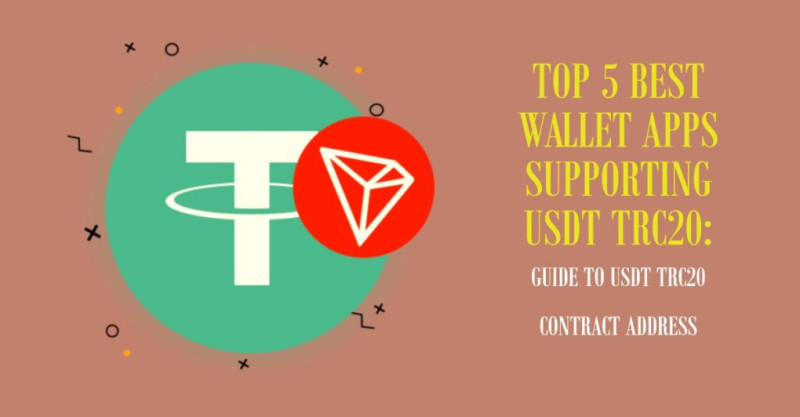
USDT TRC20 is Tether running on the TRON blockchain. Compared with the ERC20 version on Ethereum, TRC20 offers much lower and more predictable transfer costs alongside faster confirmation times. TRC20 transfers are usually estimated at $0.50 to $1, versus $2 to more than $20 on Ethereum. TRC20 transactions typically confirm in 1 to 3 minutes. This has made TRC20 a common choice for P2P trading, remittance, and frequent USDT transfers.
Evaluating a TRC20 wallet means checking the security track record, native TRON support, multi-chain capability, mobile availability, and ease of use. The official USDT contract address on TRON is TR7NHqjeKQxGTCi8q8ZY4pL8otSzgjLj6t. Verify the address on Tronscan - a different address from a wallet, exchange, or sender should not be used. Token contracts can be copied by scammers, and sending funds to the wrong address can cause irreversible loss.
Wallet Options Compared
Trust Wallet - non-custodial mobile wallet with native TRON support, 10 million+ assets across 100+ blockchains, free download, no account needed, built-in DEX swap, backed by Binance. Best for first-time users and P2P traders. Limitations: broad asset use rather than TRON-specific staking, you are responsible for your own keys.
TronLink - purpose-built for TRON, endorsed by the TRON Foundation, direct Tronscan integration, built-in TRX staking, bandwidth and energy resources to reduce fees, TRC10 and TRC20 support, browser extension and mobile app. Stronger choice than a general multi-chain wallet for active TRON users.
OKX Wallet - supports 80+ blockchains including TRON, built-in cross-chain bridge, DEX aggregator covering 300+ protocols, multi-party computation for security, hardware wallet support. Best for intermediate and advanced traders moving assets across chains.
Bybit Web3 Wallet - launched in 2024, connects to Bybit exchange, no withdrawal fee for transfers between exchange and wallet, supports TRC20 and 30+ chains, built-in NFT marketplace. For traders who want centralized-exchange access alongside self-custody.
imToken - launched in 2016, long-established non-custodial wallet popular in Southeast Asia and West Africa, more than 10 years without a major security incident, audited smart contracts, 30+ chains, multiple languages. Emphasis on reliability and security.
Atomic Wallet - suffered a major breach in June 2023 where more than $100 million was stolen. The root cause was not fully disclosed, and the team's response was widely criticized. The source advises users with meaningful balances to migrate to Trust Wallet, OKX Wallet, or another recommended alternative. It is marked "not recommended" despite supporting TRC20 and 300+ chains.
Wallet feature summary
- Trust Wallet - native TRC20, 5 stars, 100+ chains, mobile - best for beginners
- TronLink - native TRC20, 5 stars, TRON-focused - best for power users
- OKX Wallet - native TRC20, 5 stars, 80+ chains - best for multi-chain traders
- Bybit Web3 - native TRC20, 4 stars, 30+ chains - best for exchange users
- imToken - native TRC20, 5 stars, 30+ chains - best for security-first users
- Atomic Wallet - native TRC20, 3 stars, 300+ chains - not recommended
Active-Trader Wallets and Social Trading
The active-trader wallet is more than storage - it is a mobile workspace for swaps, market discovery, perpetual futures, prediction markets, copy trading, vault discovery, portfolio monitoring, and fast execution. FlipX combines a multi-chain wallet with all of these in one app. The intended users are mobile-first traders, cross-chain users, prediction-market participants, perpetual traders, memecoin and token traders, and people who want fewer disconnected tools.
The Base App is described as an "everything app" combining social activity, trading, payments, app discovery, and earning. It is available in more than 140 countries. Base states its rails move money globally for less than one cent and in less than one second. The app treats protocols, applications, creators, posts, and content as tokenized and tradable in an open market. The social feed is built on open protocols like Zora and Farcaster. Users can discover creators, trending tokens, communities, and viral content, then trade directly from the feed. You can observe what friends are trading and copy moves, or set quick-buy amounts with a double-tap. The platform supports Bitcoin, Solana-based tokens, tokenized equities, perpetual futures, and more.
Creator coins let creators monetize attention and community participation directly. Supporters buy or trade a creator's content, and earnings flow to the creator's wallet. The source claims no follower minimums, view thresholds, or payout delays. Base partnered with Repurpose.io so creators can bring content from other social networks into the app. The legal notice clarifies that the material is informational and does not constitute investment, accounting, legal, or tax advice.
Paper Trading and Bot Testing
Paper trading lets you test a bot without using real money. One experiment ran a nominal $100,000 account for about a month through Alpaca.markets using Claude Code with a Go backend and a JavaScript MCP server. The strategy involved LEAPS options, intraday scalping, active hedging, and disciplined exits. The account peaked at $120,431 (a 20.4% gain) before dropping to a trough of $93,450 (a 22.4% drawdown) after an AVGO earnings loss. It recovered to about $107,648, a 7.6% gain from the start.
The author attributed the large drawdown to concentrated tech exposure, single-name earnings risk, and Federal Reserve week volatility. Recovery came from cutting losers, taking profits on winners, switching from bullish to bearish positions, and rebuilding with disciplined position sizing. The account gained about 7% in the test period versus a stated market return of 4.52%. The author explicitly warned this was not a result to trust without longer testing across different market conditions.
The project was paper trading only, and the author repeatedly warned against using the same setup with real money. LLMs can hallucinate, produce nonsensical output, and fail to follow rules consistently. The repository lacked guardrails and safety measures for real-money use. This was an experiment, not financial advice or an AI expert demonstration.
The real edge: I trade both sides. I am not married to bullish or bearish. If the market dumps, I buy puts. If it bounces, I flip to calls. The LEAPS provide baseline exposure while scalps generate active returns.
Historical Crypto Tracking Apps
Coinbase was described as approachable for new investors - setup was simple and the displayed information was clear. At the time, the source reported more than 10 million Coinbase customers. Gemini had slightly lower fees than Coinbase and included reporting capabilities and graphs for portfolio and market info. Blockfolio was positioned as a portfolio tracker for users holding diverse assets - it tracked more than 800 cryptocurrencies and sent push notifications at user-defined price levels. Investing.com Cryptocurrency tracked 1,300 cryptocurrencies in real time with historical data and goal-price alerts. Bitcoin Wallet from BTC was a simple, secure Bitcoin-only wallet with reasonable transfer fees, backup system, and QR-reader transfers. Xapo Wallet was described with a security emphasis - The Wall Street Journal called its security "the Fort Knox of cryptocurrency storage" - with three security layers and a simple interface. BitTrade Scalping Terminal was designed for short-term scalping with a clean browser-based interface and a demo-trading option.
What to Check Before You Pick
The best app for crypto trading depends on what you need. Exchanges handle investing and trading. Wallets hold tokens and make swaps. Bots automate strategies. Check fees, features, security, and ease of use. If you are testing a bot, paper trading lets you try it without real money. Among the top rated crypto platforms, Kraken and Crypto.com stand out for depth, while Fidelity and Robinhood suit beginners who want stocks alongside crypto.
Busha, for Nigerian users, is licensed by Nigeria's Securities and Exchange Commission and supports local payment options, wallet funding and withdrawals, crypto purchases and sales, interest-bearing stablecoin features, and spending through Busha Spend. It earns up to 7.5% interest on stablecoins. The source does not provide a detailed numerical fee schedule for trading, deposits, withdrawals, or swaps. Busha states its blog content is educational and informational, not financial, investment, legal, or tax advice. Digital-asset markets are highly volatile and involve significant risk. Readers should conduct their own research and consult a licensed financial adviser before making investment decisions.
Comments on “How to Compare the Best Crypto Trading Apps, Wallets, and Bots”
No comments yet. Be the first to share your thoughts.